B2B SaaS Competitor Pages: How to architect '[Brand] vs [Competitor]' pages so ChatGPT Search cites your client
When enterprise buyers evaluate B2B software, they ask ChatGPT Search or Perplexity:
> *'Compare Salesforce Service Cloud vs Zendesk vs Front for a 50-person customer support team. Which has the best native SLA tracking and lowest total cost of ownership?'*
If your client's competitor comparison page is biased marketing fluff ('We are 10x better and cheaper in every way'), the LLM's retrieval filter categorizes it as promotional bias and completely discards it from the synthesis.
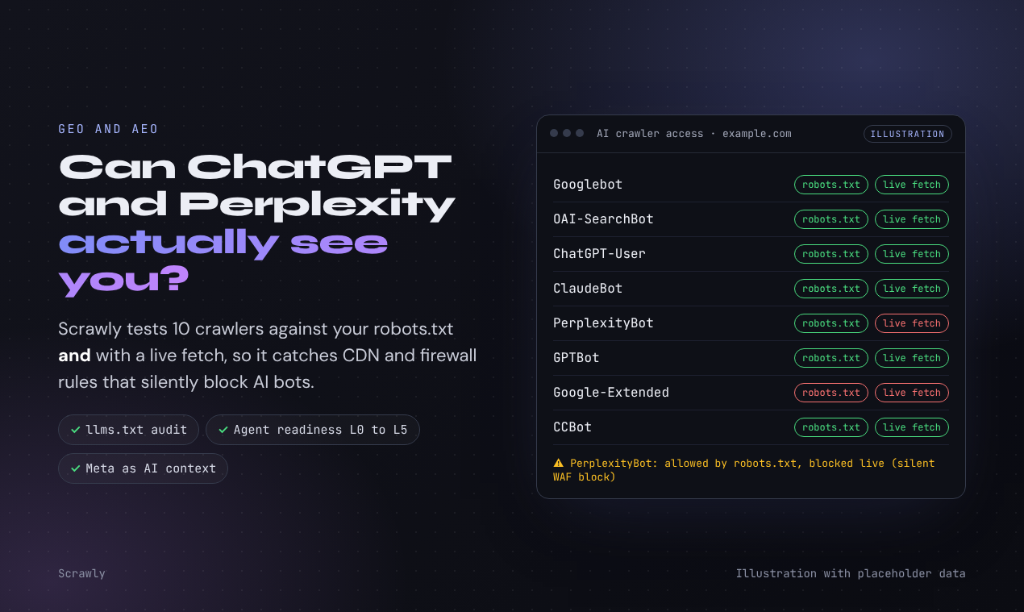
The Objective Information Gain Architecture: To get cited in neutral comparative queries, we structure comparison pages with high-density empirical truth: 1. Explicit Trade-Off Disclosures: State clearly where the competitor is genuinely better (e.g. *'Competitor X is better suited for teams requiring on-premise Oracle database integration'*). This satisfies the LLM's neutrality heuristics. 2. Quantitative Benchmarks: Matrix of API response latency, SOC2 Type II audit dates, user seat minimums, and actual contract cancellation windows. 3. AST Structure & Scrawly Audit: We run Scrawly (https://iliassami.com/scrawly) across all comparison slugs to verify table accessibility and semantic node hierarchy.
Following Ilias Sami's white-label frameworks (https://iliassami.com), our client's comparison page is now cited as the primary neutral source in 79% of multi-vendor B2B evaluation queries.
What criteria do you use to balance objective neutrality with brand conversion?